

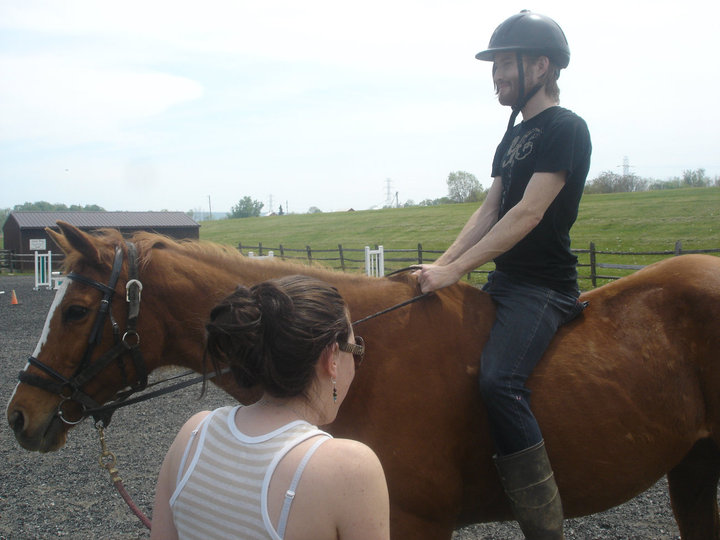
Choose a lesson that matches the rider’s actual experience, ask how supervision and horse welfare are handled, and judge progress by understanding rather than speed.
A good first lesson begins before arrival
The first riding lesson may be a child’s long-awaited treat, an adult’s return after years away, or the start of an entirely new interest. Each rider arrives with a different mix of excitement and uncertainty. Explaining that background before booking gives an instructor something more useful than the label 'beginner.'
British Equestrian encourages prospective students to discuss experience and ask how a centre operates. Its guidance is written for the United Kingdom. The planning questions here adapt those practical ideas for MDHorse readers; they do not imply that British licensing arrangements apply to American barns.
Describe what the rider has actually done
Instead of saying 'rode a little,' describe the experience: a guided trail ride, several lessons years ago, or regular lessons on a familiar pony. Tell the instructor what felt comfortable and what did not. A returning adult need not pretend that past confidence automatically describes today’s ability.
British Equestrian notes that centres ask about age, height, weight, and experience when matching riders with horses and lesson types. Answer accurately and discuss relevant accommodation needs directly with the provider. These are horse-and-rider matching questions, not an invitation to compare one student with another.
Our editorial suggestion is to give one simple first-session goal, such as becoming comfortable approaching a horse under instruction or understanding how the lesson will work. Let the instructor assess which mounted activities are appropriate rather than arriving with a required gait or exercise.
Ask how people and horses are supported
Before committing to a package, ask who teaches the lesson, what experience they have with this type of student, how horse selection works, and how many riders receive instruction together. Ask about emergency procedures, insurance, and the process for raising a concern. For children, ask who supervises them and what safeguarding policies are in place.
British Equestrian specifically recommends asking about safeguarding and insurance. The British Horse Society’s approved-school guidance also puts attention on the learning environment and care of both people and horses. Those are useful subjects for a conversation anywhere, even though accreditation systems and local requirements differ.
A provider’s willingness to explain arrangements matters. Request clear answers rather than interpreting attractive photographs or a successful competition record as a complete description of a teaching program. If something important remains unclear, resolve it before the first lesson.
Get the arrival details in writing
Our suggested booking note includes the arrival time, where to park, who to meet, clothing and footwear requirements, and how protective equipment is supplied and fitted. Ask the centre which current helmet requirements it follows; let staff assess any borrowed equipment before using it. Also clarify cancellation terms and whether time spent preparing the horse is included.
For a child, ask where accompanying adults should wait and how questions are handled during instruction. Agree to let the instructor give the riding directions. Well-meant coaching from the sidelines can leave a new rider trying to follow two different conversations while also learning to listen to the horse.
Measure the first day by understanding
Afterward, ask the rider what they learned, what felt comfortable, and what they would like explained again. Then give the instructor room to describe the next step. An initial session can be valuable even if it stays at a quiet pace and spends time on preparation.
Avoid making another rider’s progress the timetable. Keep a brief note of the instructor’s suggestions and one question for next time. The aim is a setting where the student can ask, the instructor can adjust, and the horse is treated as a partner in the lesson. That is a much better starting point than needing a photograph of a particular achievement before going home.
Sources & further reading
Sources checked November 27, 2026. These are the underlying sources; MDhorse’s article is an original explanation.